COURSES
What options do I have if I have bad credit?
Having bad credit, unfortunately, is bad, from a creditor’s perspective. It means that at some point in your near past you stopped making some or all payments for one or more months.
You might be wondering, what is bad credit? Borrowers with lower scores represent a higher risk to lenders. According to this model, a score of 669 or below isn’t a good credit score. Furthermore, scores between 620 and 669 are considered fair; scores less than 620 are considered poor or bad. This score ranges from 250 to 900; higher scores represent less risk. Each lender may have a different criteria of what they consider “bad credit” and other factors are ultimately considered when giving a home loan such as how much of your monthly income will the payment be (this is know a DTI, or debt to income ratio), your down payment, and income.

Best solution for bad credit (under 620) is to make sure you’ve save up sufficient money to invest into your home purchase. 20%-30% of the purchase price can help offset the risk someone is willing to take on you, especially when you are willing to invest it into the purchase of your dream home
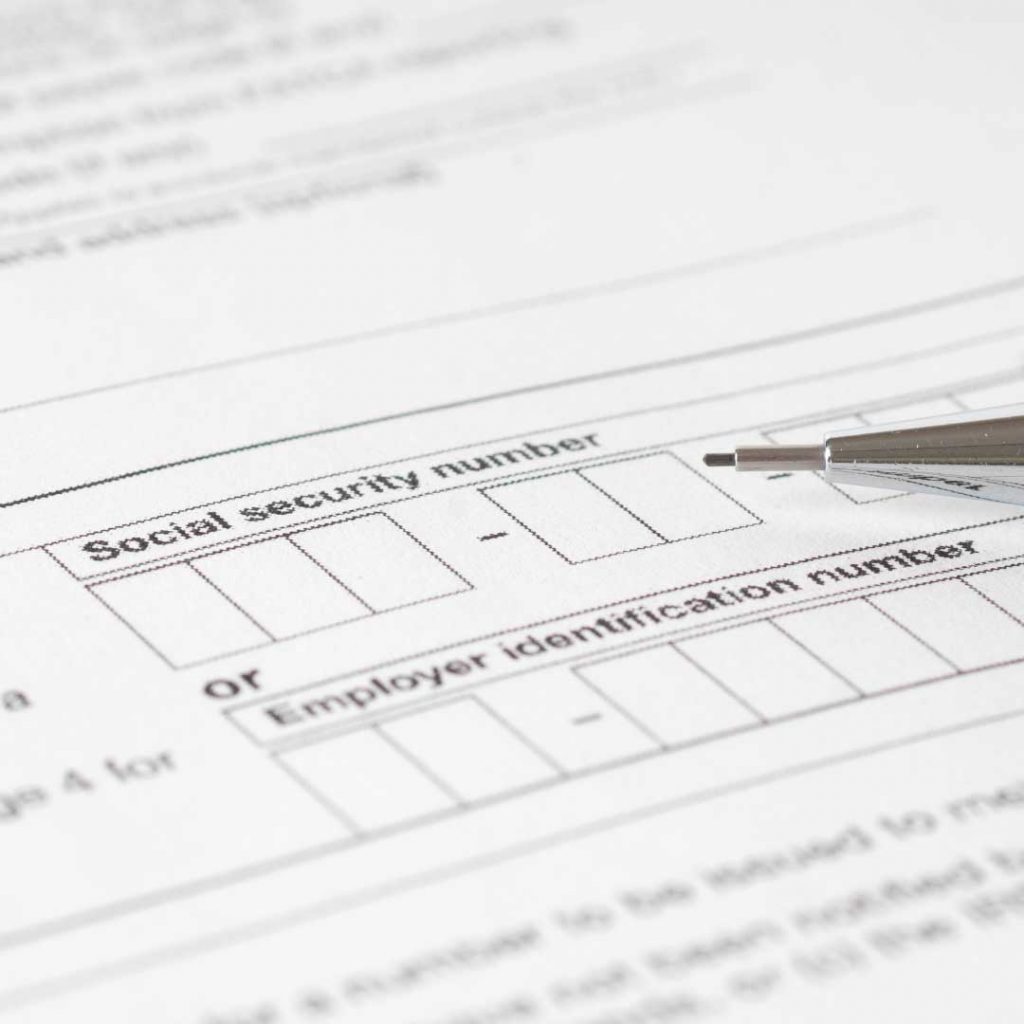
What options do I have if I don’t have a social security number?
While its true that most lenders require a social security number, its not impossible to buy a home if you don’t have one. But, you MUST have an ITIN (Individual Taxpayer Identification Number) to apply for a home. This number proves that while you do not have an SSN number, you are still doing your duty by the country to pay your taxes. Since this already puts you in the category of responsible people that have clear ties to the United States, you may easily get a an owner financier to approve a home purchase for you. The only issue here is that you may have to move past traditional banks and search for private lenders, or owner financing. Traditional banks are much more reluctant to give you funds, particularly since they are strict when it comes to documentation. However, when you go the owner finance route, you may just find the one that is more lenient when it comes to the terms and conditions.
How to Buy a Home with an ITIN Number
So, how do you even buy a house without a social security number–and only with your ITIN number? Well, the process should be rather straightforward. Here is a step-by-step process for you to do so:
Apply for the ITIN Number
If you don’t already have an ITIN number, the first obvious thing that you should do is to apply for it. Go to the IRS website, and fill in the application that they have made available for you there.
Build Credit History
For you to get a loan, you will also need to gather up some credit history using the ITIN number that you were given. Start small. Apply for a credit card, a car loan, or any other credit options. Use it every now and again to create a proper relationship with the bank. Not every lender will use your credit history to determine whether you get a loan or not–but it will be useful.
Create a Rent Payment Record
Not many people are aware of this, but many lenders look at your rent payment records before giving you the mortgage. It’s only logical: if you are able to pay your rent for at least two years in a row, then the chances are high that you will also receive a mortgage.
Build Proper Employment History
If the lender sees that you tend to get fired once every few months, they may not be as willing to give you a mortgage based on your ITIN number. However, if they see you steady–and likely to pay your bills–then there is a high chance that you might actually get the loan.
Look for Lenders
Everything seems nice and easy–but there is still the issue of actually finding a lender that provides loans based on ITIN numbers. Do some research. Call your local bank–or any other options that you may find. You may have a stellar credit history–but if you can’t find a lender, then it’s all for nothing.
Consider Owner Financing
Since it may very challenging to get approved through a traditional lender, owner financing may be your best options. You will likely need 20%-30% from you as an initial investment. But the path to home ownership may be more streamlined and easier to understand
What options do I have if I am self employed?
Self employed folks are the backbone of the American system. However, there are two instances in which in can be challenging to get a home loan in the case of self employed folks: 1) they have been self employed for less than 2 years and / or 2) they under report their income.
Let’s talk about both scenarios.

Most lenders want to see a minimum of 2 years of self employment income because they are looking for stable, reliable, documentable income. During the first two years of self employment, income may be erratic, unreliable, and sometimes hard to document, either because book keeping may be lacking or because stability has not been achieved yet. Think of a plumber who initially thought residential consumer plumbing would be his calling. His income isn’t great (bad) but its fairly steady (good). He later realized that commercial plumbing jobs pay really well. It’s possible that his income tripled (good) but now we only gets paid once or twice every quarter since most commercial jobs are on net 90’s (bad) and he can only do one or two big jobs at a time.
If you fall within the “2 year tax return” mark, you may need to look at portfolio lenders or private lenders to get a home loan. Owner financed home options are also a great choice here as underwriting can be a lot more flexible
If you have more than 2 years of self employed income, you probably start realizing that taxes suck and want to maximize your tax write-offs. While this may save you some money (in taxes), you may now appear (from you tax returns) that you cannot afford a hut. Nothing wrong with a hut, if you live where huts are the norm; but if you are here, that’s probably not you. So then you are faced with a dilemma: decrease my taxable income for minimum 2 year, and pay substantially more taxes, or rent forever? Either option is costly.
An alternative would be to seek a small bank or private lender that accepts bank statements. They usually require a minimum 20%-30% down payment, but you can now take full advantage of home ownership. You could also seek a private lender that has other ways of documenting your ability to repay. Owner financing is also a great option that allows you to purchase a home with much more flexible under writing requirements.
3 Signs You Could Benefit From Owner Financing
#1. Can’t Qualify for a Conventional Mortgage
If you cannot qualify for a conventional mortgage (ie a bank or traditional mortgage), due to not having a social security number yet (only ITIN), being self employed, or having bad credit, owner financing may be a great alternative for you.
#2. Good Amount of Money Saved Up
While its true that sometimes you can buy a home with owner financing with as little as10%, the doors really open up when a someone sees you’ve been disciplined enough to save 20%-30% of the purchase price and are willing to invest it into your home purchase. There are some professional owner financed focused companies that let you pick ANY home for sale, but only if have 20%-30% saved up.
#3. Good Income
Regardless if you qualify for a traditional mortgage or not, it’s important you have a history of steady income. While a bank may require 2 years of self employed income, an owner finance transaction may still require at least 6 months of steady income, or perhaps large reserves (for example, 6 months of payments).
5 Things Home Buyers Overlook When Buying a Home
#1. Added costs.
Lenders can tout zero down home loans all day long but there is no such thing as an absolute zero-dollar home purchase. Somewhere along the line there will need to be monies paid out-of-pocket. Home inspection costs, appraisals, and down payments may all be necessary and then there’s always additional closing costs and fees that many lenders conveniently leave out until the time comes. It’s important to understand all of your costs upfront so you’re not only financially prepared but emotionally as well. The last thing you want is to move into a house with practically nothing in the bank. Having a little bit of cushion and preparing your finances for purchasing a property will set yourself up for success and you’ll feel a lotless stressed going to the process. When you are trying to buy with owner financing because you’ve been rejected by a bank, its common to expect to need between 20%-30% total initial investment on your part (cash to close).
#2. Property taxes.
If you’re moving from one owned home to another you probably understand the logistics behind property tax, but if you’re going from renting to buying, property tax will be one of those additional fees that can be built into the mortgage but will need to be added. Property taxes dependent upon your location, the size of the home, and the size of the lot or parcel. The larger the home and lot the more in property tax. Plus, depending on the county in which are in, property tax may be higher than in another county. It’s important to understand how much this will add to your monthly mortgage payment. Even when you buy with owner financing, you still have to account for paying property tax.
#3. Homeowner association rules and restrictions.
First-time homebuyers may not think anything about the fact that they have to pay an association fee. You might get a lot of perks and amenities such as a community swimming pool and clubhouse, but those do come at a cost. Ask about your homeowner association fees or condo association fees and how much they would add to your monthly housing cost. A $2000 mortgage may easily turn into a $2500 housing cost based on the monthly or quarterly homeowner association dues.
#4. Parking.
When you pull up to a home with your real estate agent or even if you meet them there, you’ll probably only use two spots but if you have two or three cars, an RV, a boat, or any type of vehicular toys, you’ll need some place to park them. Don’t forget to factor that into your search.
#5. School districts.
Again, while this might not be the ultimate deciding factor, it should be considered. Even if you don’t have children, selling a home in a less than ideal school district might be a little bit challenging. Of course, if this is your only negative factor about the property it shouldn’t stop you from buying the home of your dreams. But it is something you shouldn’t overlook, especially when playing the long game.
7 Things Owner Finance Buyers Need To Avoid
#1. Less than 30 years to repay.
When you are given less than 30 years to repay, your monthly payment increases and your purchasing power decreases. This can put you in a situation where instead of being able to buy a $300,000 home, you are now stuck in a $200,000. Avoid anything less than a 30 year amortization.
#2. Balloons
Balloons are clauses in a mortgage that require you to pay a lump sum of money, usually the entire amount owed at that moment, in one payment. For example, you could have a payment plan that uses 30 years as the basis for the payment, with a 2 or3 year balloon. This means that when month 24 (2 years) or month 36 (3 years) arrive, you have to find a way to pay the entire unpaid principal balance. The ideal exit strategy is to refinance to another lender or bank. However, if you are unable to refinance, you are left with little option but to sell the home. If you are unable (or unwilling) to sell the home, you most likely will lose it to foreclosure. You will then have a foreclosure on your credit, you would have lost your home, and every penny you paid so far. Balloons are evil! Since you have no way of knowing what the future holds, avoid them like the plague!
#3. Pre payment penalties.
Pre payment penalties, sometimes referred to as minimum lock in periods, are clauses in the mortgage that penalize you for an early lump sum payment. Say you win the lottery and want to pay off your mortgage, or your situation improves and you want tore finance to a better mortgage, a pre payment penalty, sometimes called a fee, or exit charge, will need to be paid. Sometimes these pre payment penalties can be thousands of dollars. This is something you want to be aware of and avoid, as they can make refinancing a financial burden for you when the time comes.
#4. Not closing at a title company – aka “Kitchen table closings”
You always want to make sure you close with a reputable title company. This will make sure your title is protected against any claims. Never close with just a notary public at an office or home.
Imagine that the previous owner had an illegitimate son or daughter, and he died right before the home is sold to you. You buy from the only two known children. That child may be able to claim title to the home and you may not be able to sell it with a clean title in the future without this blessing. Of course, we can all imagine that “blessing” could come with a price. All that can be avoided by always closing at a title company.
Or imagine that a home is sold with a mortgage to “Big Bank”. Do you really know if the underlying mortgage was paid off before you bought it? Do you really have a “free and clear” home? While its not illegal to sell a home with owner financing that leaves another mortgage in place and unpaid but current (this is called a “wrap mortgage”), it does add a level of danger to you. Rarely are these transaction done with the approval and blessing of the “Big Bank”. If they find out the home was sold, or transferred ownerships, they could have the legal right to call the loan due. This is called the Due on Sale Clause(“DOSC”). Virtually every mortgage in America has this special clause. If the “Big Bank” chooses to call the loan due, will you have the cash to pay off the balance? Probably not. Will you be able to refinance? Who knows, but probably not, otherwise you would have already. BIG, BIG problems can arise if this happens.
If the seller cannot or will not close at a title company, be very suspicion. Even closing with an attorney does not guarantee you he will defend the title if needed (not legal advice). Always insist on closing at a title company
#5. Mark ups
Although financing the home to you is a genuine service, is it really fair that a seller charges you a higher price to finance it? We don’t believe so. He is already earning a fair profit from the interest he is charging. Adding mark ups just doesn’t sit well with us and we believe you shouldn’t have to put up with them.
There are instances in which a seller or “owner finance focused companies” charge10%, 20%, 30%, even 50% more. While you may think, “what does it matter? I’m getting the home I want. We live in America! If I want to pay $1,000,000 for a home that’s only worth $100,000, isn’t that my business?”. While that may be true, here is the real hidden danger. Do you think any bank will refinance you if you owe more than the home is worth? You guess it–unlikely. Be very cautions of seller and / or owner finance companies that marks up the home
#6. True Purchase
Buying a home with owner financing compounds two daunting tasks–buying a home AND financing it from the seller or alternative source–into one. Make sure you are in fact “buying” the home, meaning you get the deed on day #1. Consider the following examples:
- “Contracts for deed,” while legal instruments, don’t give you the deed until you finish paying off the home.
- “Rent to own” are similar arrangements. The home isn’t really yours until you finish paying it off. You might not be able to sell it, rent it, fix it, or do anything to it other than live in it.
- “Lease Options” (or “leases with option to buy”), are not real purchases. As a matter of fact, they aren’t even purchases at all, despite the seller asking many times for a large down payment and or charging interest. Like the name implies, this arrangement only gives you the “option” to buy at some time in the future, and only if certain criteria is met.
What are some red flags to look for? Here are a few:
- They will ask for “down payments” and / or charge “interest” but you won’t get the deed in your name;
- They will not close with a title company (title companies only close true purchases);
- They will not close with an attorney. Caution: Attorney’s may close true purchase or other legal transfers of property, but at least you are with someone that is at least suppose to be honest and tell you the truth in plain English what is really happening;
… Just to name a few